Each month, Barricade’s co-founders share the music, video games, films, and media that they’ve enjoyed.
Written by Barricade Co-Founders
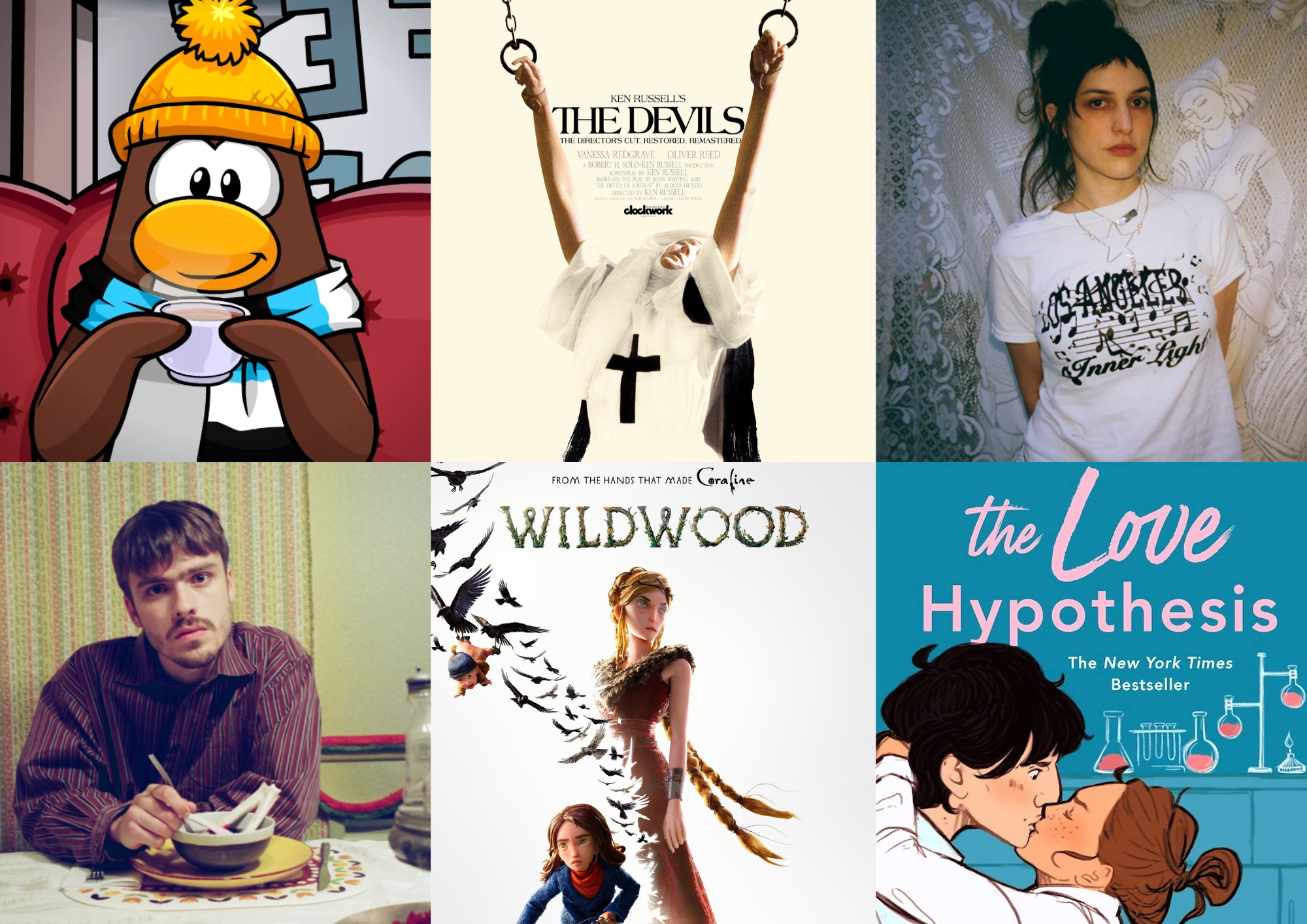
Images courtesy of Club Penguin Journey, Warner Brothers, Grace Pickering, Columbia Records, Laika Studios, and Berkley Books
Luna
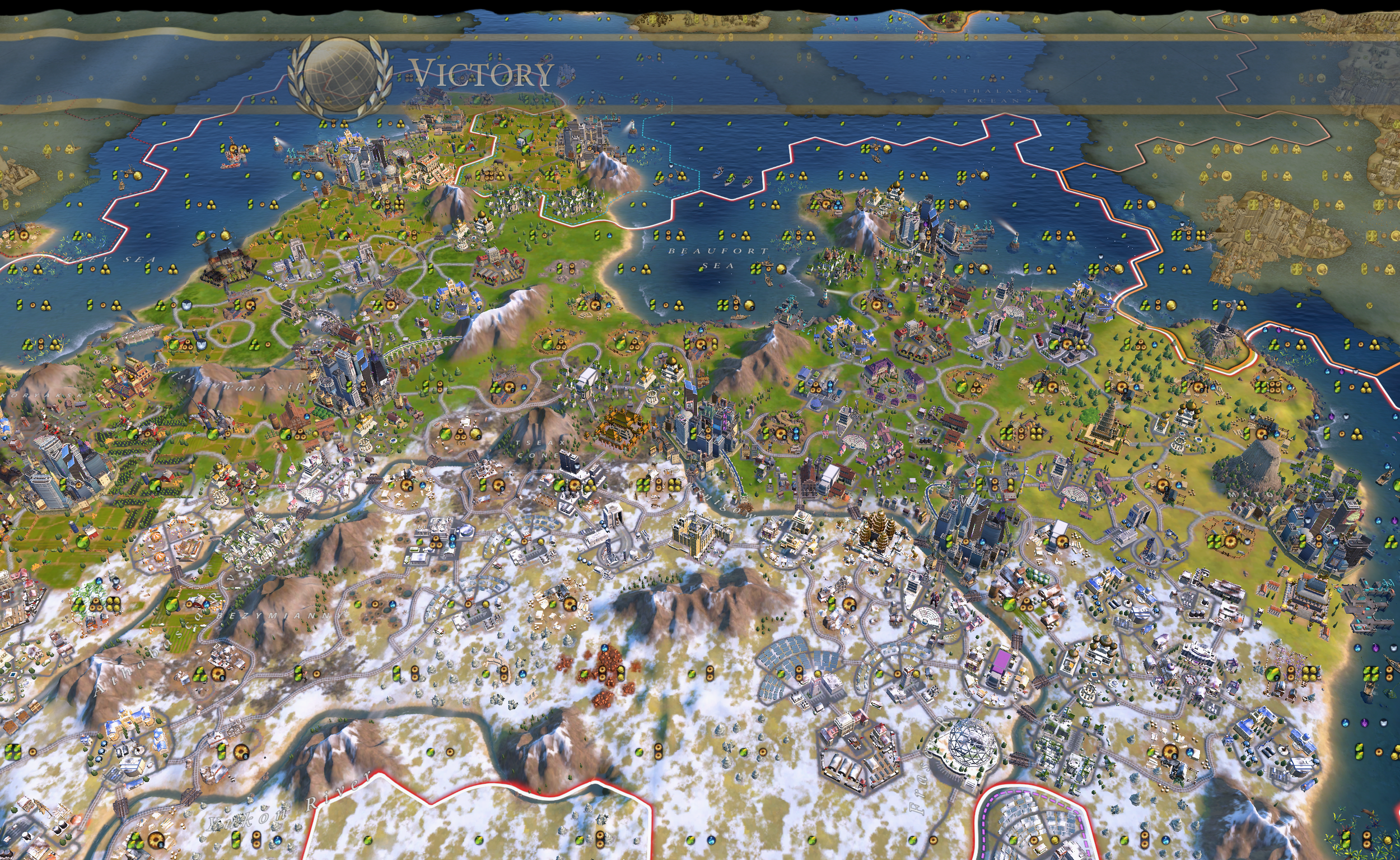
Image courtesy of Firaxis Games / Luna Harper
Playing: One of the most painful things about autism burnout is how it can alienate you from your special interests. In my case, burnout made me fall out of love with Civilization VI, one of my all-time favorite games. I left it untouched for most of last year, as I lost the mental capacity required to stare at my screen while making strategic decisions for hours on end.
While emerging from autism burnout has been a slow process, I’m happy to share that I’m at a point in my journey where I’m able to enjoy Civilization VI again. It feels like I’ve regained a major piece of myself, and I’ve already poured hours into it over the past week alone. To ease back into strategy gaming, I played as one of my comfort leaders (Jayavarman VII of the Khmer) at the second-highest difficulty level, Immortal. After winning a Culture Victory under 200 turns, I was ready to tackle the highest difficulty level, Deity. For an extra challenge, I played as Wilfrid Laurier of Canada for the first time on an Archipelago map. Conquering Russia was a highlight of that save file, which granted me much-needed space on a map that was scarce on land. Ultimately, I won a Science Victory around turn 250, which meant I was ready for a new game.
I usually play Civilization VI with mods like Sukritact’s Oceans and game modes like Heroes and Legends, which diversify the gameplay experience but inadvertently make winning easier. To give myself a real challenge, I disabled my usual game modes and designed a save file that would maximize chaos. I let the game choose a randomized leader and map type, with Tech and Civic Shuffle mode thrown in for good measure. The result has been one of the most fun—albeit difficult—Civilization VI save files I’ve ever played.
As João III of Portugal, I was almost entirely isolated from the world until the Renaissance Era, because I spawned on a remote continent surrounded by unnavigable ocean tiles. I fought tooth and nail to survive, fighting barbarians at every turn and losing my chance to found a religion, closing off the Religious Victory entirely. To make matters worse, the Tech and Civic Shuffle mode made it difficult for me to discover the Cartography technology, which would help me navigate the ocean to leave the hellscape of my spawn location. By the time I did discover Cartography and meet the other civilizations, the rest of the world had already been developed. As I enter the Industrial Era, I’ll be building my navy to pursue a Domination Victory and take all the land I couldn’t settle (evil villain laugh).
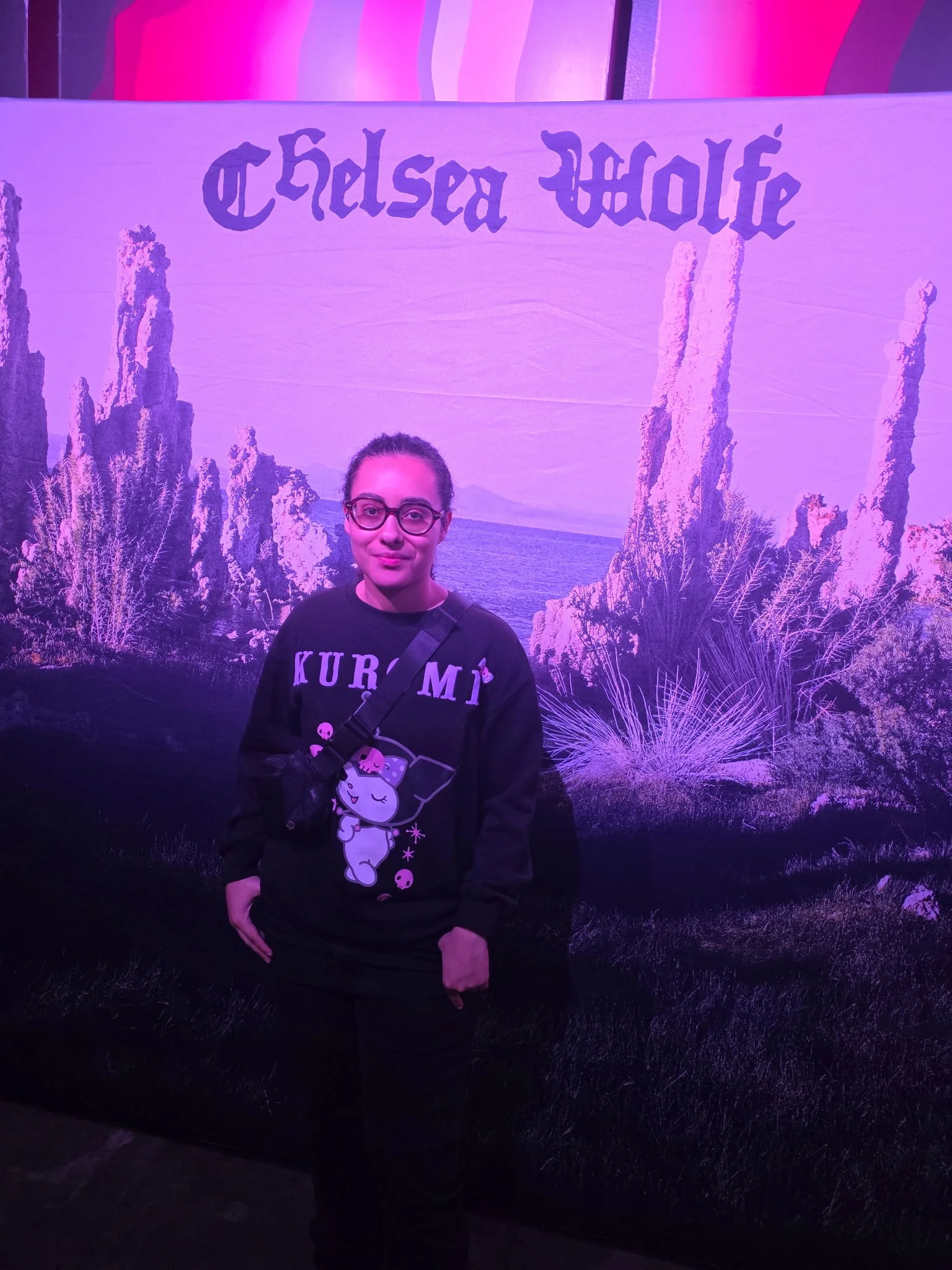
Photo courtesy of Luna Harper
Listening: Whenever I haven’t been listening to the Civilization VI soundtrack, Tinashe’s Popstar has been on repeat. Earlier this month, though, I took a break from obsessively streaming my album of the year with a detour into deathcore. I listened to Crown Magnetar’s The Hollowing of Godflesh, which came out late in September. At just under 30 minutes long, the record is a masterclass in how to pack a musical punch. The Hollowing of Godflesh is relentless in its cacophony, and songs like “Shut Up and Bleed” are deliciously brutal.
Another highlight of my month was seeing Chelsea Wolfe perform live at my favorite Austin venue, Emo’s. I had previously missed her 2025 tour due to autism burnout, so I had high hopes for her October 17 show. She did not disappoint. Her vocals were tender yet jaw-dropping, and her stage presence was arresting. Wolfe’s set kept me engaged as she explored different sonic palettes from her career, from the acoustic balladry of “Flatlands” to the electro-gothic abrasiveness of “Whispers In The Echo Chamber.” She also surprised me with some songs I didn’t expect to hear on the setlist, like “The Culling” and “16 Psyche,” two of my favorites from 2017’s Hiss Spun. It was an unforgettable night, and I’m happy to finally cross off one of my most anticipated artists from my live shows list.
After my foray into rock music, I had to ride the electronic wave again to wrap up the month. I’ve been streaming Oklou this past week, which has brought me great solace as I’ve enjoyed the cool fall breeze outside with my dogs. I knew Oklou’s music was good—I didn’t realize it was that good. When it comes to pop, I admittedly tend to go for whatever is loud and overtly transgressive (my unending obsession with Arca comes to mind). But lately, I’ve been craving something quieter, and Oklou’s choke enough has been scratching this itch. I love how each track feels subtle yet intricate, inviting you into the French songbird’s evocative worldbuilding with layered synths and hushed vocals. “Harvest sky” is an instant classic, while deeper cuts like the title track and “family and friends” have grown on me with more listens. Choke enough is the epitome of electropop whimsy, and it’ll remain in my rotation as the months grow colder.
Reading: As the semester has gotten busier, I've read more for my Master's than for pleasure. This month, the only book I finished was Eva Baltasar's Mammoth, translated from the Catalan by Julia Sanchez. The novel is the final installment of “Three Wild Bodies,” a trilogy of works loosely connected by their lesbian protagonists. I haven't read Baltasar's previous two novels, Permafrost and Boulder, so I went in not knowing what to expect. Mammoth is at once visceral and aimless. It follows a disaffected PhD student who moves from Barcelona to the Spanish countryside in search of… something. Other than her desperate desire to gestate, it's never clear what the protagonist wants or why she makes the rash decisions she does. She drifts through life listlessly and falls prey to impulse like a rabid animal.
The book is rife with uncomfortable scenes. Whether the protagonist is having sex with men as a lesbian or killing cats for little reason, everything she does is an act of destruction. Once she does get pregnant, it's only a matter of time before she implodes. The vivid body horror of her all-consuming pregnancy made me squirm in the final pages. Ultimately, she gives birth but abandons the baby within days. Racked with guilt, she proclaims that “there is no desirable life,” leaving the book on a bleak tone. Mammoth was a quick but intense read, one that will surely stay with me for a while.
Watching: This month, I had the opportunity to interview filmmaker Meghan Ross on her Austin PBS series, How We Grieve. Co-created with her brother, Justin, the traumedy docuseries explores how people turn to comedy and art to process death. At just three episodes long, it’s a brief but thoughtful watch. As someone who has never feared death but does struggle to express grief, I found the show to be equally moving and insightful. I’ll definitely be on the lookout for a potential second season.
For Halloween, I watched Ana Lily Amirpour’s feminist vampire flick, A Girl Walks Home Alone at Night. The film has been on my watchlist since it came out in 2014, so I came in with high expectations that were sadly crushed. I had taken the movie’s title quite literally, thinking it would explore the universal horror that is walking at night as a woman. Unfortunately, the feminist themes were far more heavy-handed, as the film follows a young vampire who preys on men who wrong women. The premise got old pretty quickly, and aside from a killer soundtrack, the only redeeming quality of A Girl Walks Home Alone at Night was that, at the very least, it helped me practice my Persian comprehension.
On a brighter note, Kavari’s feature on bassen radio might just be the best DJ set I’ve watched all year (sorry, underscores). The British artist had me floored with her song choices, which ranged from Ninajirachi’s “Fuck My Computer,” to EsDeeKid’s “Cali Man,” to industrial edits of Brazilian funk. My favorite moment came at the 37-minute mark, where she combined operatic vocals from Bach’s “Come Sweet Death” with bell chimes and ear-splitting white noise to create Lingua Ignota-esque soundscapes. While Kavari’s distorted approach to mixing might scare the hoes, I thoroughly enjoyed her set. It’s truly one for the books, and I urge anyone reading to drop everything and give it a try.
Arundhati
Content Warning: mentions of suicide
Reading: I’m rereading Jane Eyre for a class and am absolutely in love. The last (and first) time I read Charlotte Brontë’s seminal work, I was 10 years old, so I had no real grasp on just how hilarious and well-paced the novel is. Jane’s inner thoughts are comical and, honestly, often quite relatable, while Rochester’s antics are downright ludicrous. I thought I didn’t care much for romance—and, yes, Rochester and Jane are problematic; no, I don’t want to go into it—but I think I just don’t care for it unless the characters are incredibly funny.
For pleasure (if you’d call it that), I read Yiyun Li’s memoir, Things in Nature Merely Grow. Li is, easily, one of my favorite contemporary authors. Her style is trim but achieves a depth of spirit that makes her language easy to grapple with and difficult to tend with. The writing in this memoir, a book for her second son James, is thematically almost impossible. For the second time in her career, she writes about life before, during, and after a son’s suicide. This book comes a handful of years after her book for older son Vincent, Where Reasons End, which was a novel that, again, explored life before, during, and after a son’s suicide.
Things in Nature Merely Grow tends with the lifestyle of radical acceptance Li tethers herself to after losing both sons to suicide. It’s a tough read for those with siblings; I found myself physically having to remind myself to breathe. It is, I imagine, even more challenging for parents to get through. Neither of these compare to how easy and arduous in equal measure it must have been for Li to write. I don’t know if I can encapsulate the book in a review, necessarily, but I do think it is worth a read. Perhaps only if you aren’t actively grieving, though, unless you, too, are strong enough for radical acceptance.

Image courtesy of BBC One

Photo courtesy of Sumit Paul-Choudhury
Watching: Great British Bake Off is about five episodes in at the time of writing this! I’m not quite sure who I’m rooting for, but this is typical of my relationship with the show. Everyone is just so pleasant, it’s impossible to pick a favorite. I was sorry to see Yannis leave after dessert week, but I was honestly jubilated to see him make a topor during the edible fashion challenge just a week or so prior. A topor is a type of crown that Bengali grooms, predominantly Bengali Hindus, wear during weddings. It looks a bit like a dunce cap. I am an Indian Bengali—Yannis is Bangladeshi, if I recall—and my partner is not; it greatly pleases me to know that he will one day have to wear the topor. I doubt it’ll be edible, though.
Love is Blind is back, this time in Boston. It’s been a tough watch. I was hoping for just one normal South Asian person, but we can’t even have that. I suppose I can’t expect much from reality TV contestants, but Aneha telling Cam that her parents don’t want to meet him because of his race is not only not representative of my experience—not that she has to be, but come on—but just fans the flames of retributive racism towards South Asian Americans. It’s easy for other groups of people to see us as subhuman when you give them the idea that we as a monolith see them as such.
Audrey and I watched Other Mommy in theaters; it was more funny than anything else. Jessica Chastain kills it (haha) as a creepy crawly, though. Primetime fell short in the third act after introducing a sort of ancient evil that was really just some guy in a dollar store demon mask. I was more interested in its exploration of the human evil of it all. Wildwood was unbelievable in terms of its artistry, but the first 45 minutes were bogged down by millennial quirk chungus scriptwriting. Still, I highly recommend a theater watch. Whalefall was horrendous to the point of being unbelievably funny, but Austin Abrams really did the best he could with what he was given. It was a visceral experience, I’ll say that.
I did, indeed, See Everything. No comment at this moment in time.
Playing: I haven’t been gaming in the slightest this month.
Listening: I’ve been getting really into Maggie Lindemann’s 2022 album, SUCKERPUNCH. I would go so far as to call it pop punk perfection. Genuinely, it’s a no-skip album for me, and will definitely go into my forever rotation. Her voice is perfect for the genre, and even though she covers pop punk tropes such as heartbreak, her clean vocal tone coupled with absolutely gnarly guitar riffs still breathe new life into a steadily unsteady genre. I’m especially fond of the instrumentals in “take me nowhere,” the chorus in “self sabotage,” and the screaming in “break me!,” which features SIIICKBRAIN.
Since the 23rd, I’ve also been listening to brakence’s marroW nonstop. I reviewed it upon release: go check it out! He’s touring soon, which is wildly exciting (I’ve already bagged tickets). I won’t belabor any points I make in my review; however, I must offer up a Chaucerian retraction. I actually really love “tougH” but had to hear it over my car stereo to realize this. It’s an open air song that, paradoxically, doesn’t let you breathe.
Caroline
Reading: This month, I read Ali Hazelwood's The Love Hypothesis, which was bad. I want straight women to get better taste! In theory, I understand the appeal of wish fulfillment fantasy, but I suppose it’s a bit harder for me to appreciate when the fantasies in question are “sitting in a professor’s lap during an academic talk” and “a tall man being nice to you.” We should all check in on our local heterosexuals after this.
I also read Kurt Vonnegut’s debut novel, Player Piano, which was good! I don’t think that it entirely compares to some of his later works, but it still had all the same intriguing dystopian concepts and quirky characters that he’s known for, and I was absolutely compelled throughout. This has definitely sold me on exploring some more of his lesser-known works in the future.
Audrey
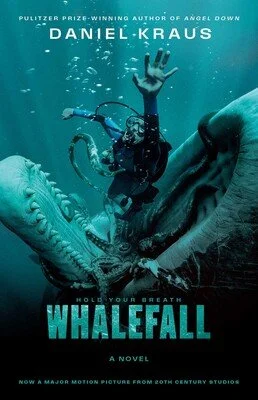
Image courtesy of Simon & Schuster
Reading: Most of my reading this month was inspired by movies I saw recently. I read Daniel Krauss’s Whalefall, which I will say the film adaptation did not do justice. The book reads like a horror story in the present and flashbacks thanks to both the physical horror of the whale and the psychological horror of the main character’s father, whom Josh Brolin portrayed a bit more sympathetically in the movie. I’m surprised the film adaptation managed to get a PG-13 rating considering the book is practically begging to be made into an R-rated horror when Krauss delves into the grisly details of protagonist Jay’s injuries, which are slightly toned down in the film. Don’t get me wrong, it was still hard to watch Jay suffer in the film while Austin Abrams excellently portrayed him, but Krauss’s original text warrants an even more harrowing film.
Watching: I finally caved and joined the cult of AMC A-List this month, mainly because I really wanted to see Ken Russell’s The Devils and my local Cinemark is too cowardly to show NC-17 rated films. Now that I’ve seen Ken Russell’s The Devils, I have even less respect for my local Cinemark and whoever was in charge of censorship in 1971, because the film itself didn’t seem all that controversial to me in the current year of 2026. I went into the theater expecting to see a shocking and blasphemous horror film, only to leave having seen a fascinating historical drama about the chaos that results when church and state become intertwined. I’m glad I saw the full director’s cut of the film restored on the big screen, but I was a bit underwhelmed by the content of the film itself. Vanessa Redgrave delivers a wonderfully seething performance as the repressed Sister Jeanne Des Agnes, whose unrequited obsession with the original hot priest Urbain Grandier (Oliver Reed) sees the French government take advantage of an opportunity to oust Grandier on accusations of witchcraft. Truth be told, I cared less about Grandier. I’ve seen the Film Twitter accounts lusting after him and will concede that Oliver Reed gave one hell of a performance, but I also found the character to be somewhat of a pompous hypocrite. But that was also part of why I nevertheless enjoyed the film, since some audiences in 2026 seem even less equipped to handle a morally grey character. Hell, they couldn’t even handle The Devils in 1971.
Listening: “On Video,” the Phoebe Bridgers single that plays during the end credits of Primetime, has been on repeat ever since I saw the film late last month. I love the blaring guitars in the chorus; the fuzzy acoustic strum that opens the song, and Bridgers’ haunting delivery of “I saw it all” before said blaring guitar chorus kicks in. It’s the perfect song for Primetime, but more importantly, it’s one of the best songs Phoebe Bridgers released this year despite some very formidable competition with highlights from her latest album, Lost Weekend. In a less stacked year, she’d be a lock for the Best Original Song Oscar. Surely Dianne Warren can go one year without a nomination just this once.
I’ve also been listening to a lot of Jane Remover. As someone who’s followed their music since their first album Frailty came out almost five years ago, I love how Jane continues to make music that is simultaneously catchy as hell and impossible to describe to coworkers. Sometimes, when other artists release music that sounds too much like music that came out ages ago, I tell myself repetition is bound to happen, especially when there are only so many notes in an octave. Yet Jane Remover is proof that those artists merely suffer from a skill issue, because Jane’s samples and interpolations only serve to transform the source material into something else entirely. “How To Teleport,” a highlight from their recent EP, Heart, (stylized as a heart symbol on streaming services) is a current favorite of mine because of how the singer incorporates a melody some may recognize from Zendaya’s pop single “Replay.” It never feels like sampling or interpolation because Jane’s chaotic sound is so carefully curated and expertly designed.
Playing: Truthfully, I have not gamed much this month, but my nostalgia for the games of yesteryear saw me visiting a hidden gem: Club Penguin Journey. It’s a fan-made recreation of Club Penguin based on the 2008-2012 era of the original game, with some elements from 2013-2017 mixed in (but without all the Disney takeovers from that era, which ultimately took the fun out of the original game). It’s completely free to play, so those who never got to experience Club Penguin with a paid membership during its heyday will appreciate being able to customize their penguin and igloo without the limitations that the original game imposed on free players.
Even those who were lucky enough to have a membership during the original game’s time will have more customization opportunities playing Club Penguin Journey thanks to the hardworking developers who have added layering for some items. Where the original game forced players to choose between a wig and a hat, or lashes and liner, Club Penguin Journey allows players to layer those items and create even more fashionable looks for their penguin. In some ways, it’s like the original Club Penguin never went down, but in other ways, the fanmade additions surpass the original game entirely.
