Brakence’s most ambitious work yet is also his most dichotomous. There’s something for everyone on marroW.
Written by Arundhati Ghosh
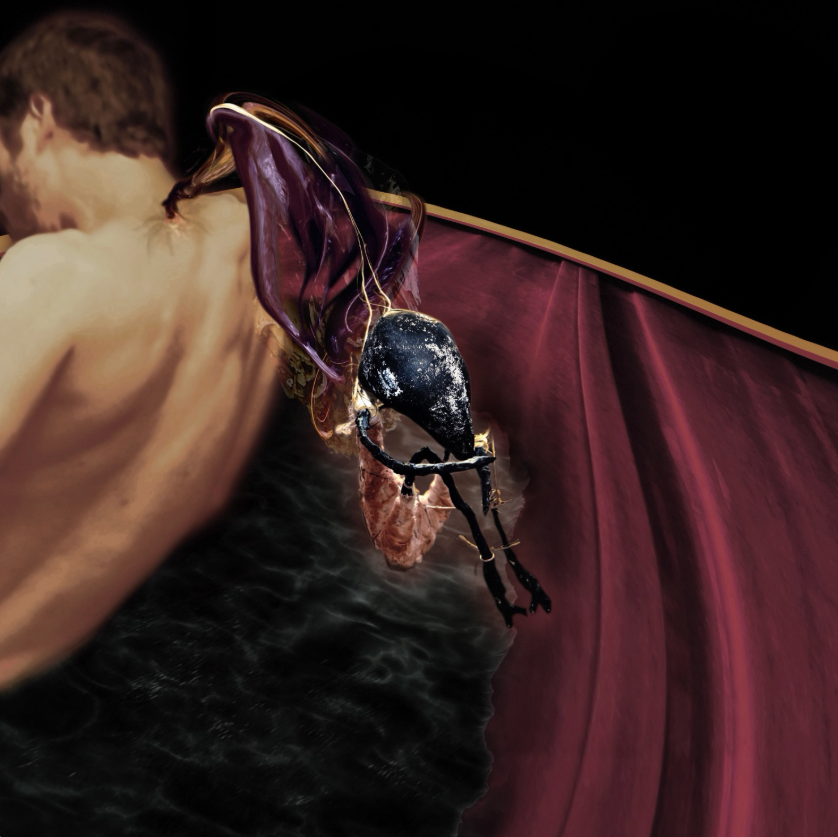
Image courtesy of Randy Findell (brakence)
Brakence collapsed four years of silence into nothing the second “madeleine,” the first track on breathlessly-awaited marroW, shifted from reedy, grating instrumentals to the alternative auteur’s full-throated lower registers. As he raspily implores the subject, or perhaps the object, of the song to “open your scar, peel back your skin,” listeners can’t help but feel as if he’s talking directly to them, each and every one, individually. The synth that buoys the track stretches, slipping and sliding right into “death rolL.” If ever a song has been gelatinous, this is it, with kicking drums and notes that stick to your skin. Even so, the brief period of stripped vocals that erupts into completely in-character wreckage of notes (positive) that closes the song betrays a sense of unrivaled musical selfhood.
Even as track three—of 18—takes a more upbeat, jazz pop tone, the apocalyptic undercurrent ignited by the aforementioned noise music brakence is so adept at channeling remains in his lyricism. “Problem Child” opens with revelations about the vocalist’s situation, singing of missing warheads and choking air before referencing Prince’s bloody skies “as purple rain pours through the ozone hole.” He crafts a narrative of straying from religion in favor of over-understanding the apocalypse one already exists in: he implies that the end times are here, and always have been, and you can’t be saved anymore.
“Problem Child” is where the underlying character study of the album begins, with several following songs echoing thematic ideas introduced in this track. He sings of his divisive relationships with mother figures, growing up in a post-anthropocene world, feeling tied to creatures and concepts he wishes to extricate himself from, and straying from a religion he yearns a sense of kinship for. These threads of a narrative that the listener must string together start here, but recur incessantly. Because of this, “wishing well”’s jaunty guitar, following this grim reminder of, well, everything, is inexplicably like going for a smoke break on the first below-freezing day of the year. Though track four’s funky dive bar instrumentals are almost a departure from brakence’s typical hyperpop sphere, and his self-harmonies are new, nothing is truly uncharted with how broad the Ohio native’s sprawl goes.
“guessworK” asks listeners to lean in as brakence adds a new element to the instrumentals every half-minute or so, from clapping beats to aforementioned gloopy synths. Nobody could ever accuse brakence of withholding on hypochondriac, but the raw fervor in his voice is perhaps even more revelatory on this project. He takes an outside view of his body, likening himself to a person transitioning into a marionette, riffing on ideas of losing an understanding of the self. An external voice—or perhaps his own—tells us to “pour it all out, fuck it” before decidedly not bleeding into “jesteR,” which brims with discordant chords slapping against brakence’s glitching, pleading vocals as he fields accusations of “corrupting the kids.”
Track seven, “tougH,” begins with eerie seesawing fluted brass sounds before jumping into a cadence reminiscent of hip-hop dance tracks. While arguably the most sonically textured track so far, it overworks itself, the first half of the song flying too close to the boundary between noise and noise music. The instrumentals drown his voice out in a manner not quite conducive to the art itself for this song specifically, but he pulls himself out of the murk by the time “ready or noT” kicks off.
There’s no questioning why “ready or noT” was the first single off of marroW. It’s so brakence at its core, with its rap-sung lyrics and flawlessly navigated syncopated slippage. Just as he flips the notes on advancing “the judge above the law / If it don’t dance the chase is on,” the song gives chase to the listener, but not unkindly. In his pure velvet singing voice, he closes the single reminding himself, and listeners, “I know you well.” “body” returns to the jazz of “Problem Child” but cultivates a far smokier, sultrier, more low-key atmosphere. Brakence never needs to remind us that he can’t just sing, he can sing, but thankfully for us all, he does so anyways. In his own lyrics, “oh, dear Lord.” He begs God, asking “why’d you tie me to this creature,” giving us a reprieve from marroW’s apocalypse only in sound.
That’s the first half of the album through, and “sinkflY” offers a sense of rebirth with its near-naked instrumental layer. The album’s tenuous religious allusions continue as brakence, calmly eluding interjected strangled screams, lilts that “in hеr arms, I feel just like a baby / I'm ashamed he nеver grew / I warned him not to sin / To keep the kid from falling / I feed him to the garden.” The background devolves into clashing guitars, which brakence’s steady tone continues over until it can’t. Born of the discord, “bitE,” feels rebellious. Largely eliding aforementioned themes of despair, “bitE” capitalizes on the other main, raw thread of this album: anger. It’s his voice that’s harried this time, over drums that beat within reason and a synth that follows its leader. It works.
marroW has, thus far, provided a compelling argument against placing the artist under one genre. “Boss Fight,” with its bouncing guitar and honeyed vocals, moves this idea along. Brakence is prone to cascading third act hyperpop twists in his songs, and “Boss Fight” is no different, but he shows off his alt-folk-pop chops nonetheless. “crystallized” switches things up thematically, from a rumination on movement (or lack thereof) to a visceral, almost obsessive love song. The budding alternative noise music posterboy kicks it into gear as he sings about how “she could write a whole song and never even know it / And you can find us in the cavern where the cliff eroded / Packed together with our fingers lattice locked and loaded.”
Somehow, “crystallized” transitions smoothly into the initially dampened track 14, “traitoR.” A crystal clear piano joins brakence’s pleading croons, followed by a whole host of other sounds, sometimes conflicting, sometimes in harmony. It’s a masterclass in leading the listener in, bit by bit, until they have no idea how they got from point A to point B. He sets us up to expect the same from “heart,” knowing that we know better than to assume that we’ll ever listen to a brakence ballad as just that. Yet, this is just what we receive. While perfectly situated in the album, “heart” still runs the risk of appearing boring next to its siblings but manages to carefully avoid it due to its earnest, guiding lyricism: “They won't see it coming, talk to the gun / It's true enough to say it / You try to understand / You call yourself a friend / You're not listening to your heart, oh no.”
Listening to “Helene’s Solo” is like listening to the most harmonious radio ever made while switching channels with reckless abandon. The droning traps listeners’ souls into this song’s universe, pulled into its orbit without intention. The second-to-last song on marroW, “do what you can,” is a work of narrative. It begins with a looping background reminiscent of early aughts alt rock. No matter how many purposefully discordant elements brakence introduces throughout, fading them in and out of existence with deftness, the sense of unease that has built the foundation of this album is kept at bay by the sheer beauty of his voice and adjacent sense of balance. The album closes with “With or Without it,” wherein brakence laments that he’s “still stuck in this mortal coil,” pulling the album tightly shut thematically.
marroW is, simultaneously, brakence’s most narrativized and most real album yet. It is his most dark, and most light. It looks to the past just as equally as it looks toward an uncertain future. It’s trite to say that one work is so dichotomous, but if brakence is seeking to encapsulate a microcosm of the human experience, I’d say he’s getting there. This is high praise to heap on someone, I’m sure, and perhaps the hiatus has something to do with how deeply pleased I am with this album. However, I firmly believe that brakence deserves his flowers. This is, without a doubt, an album that will age like wine. It has something for everyone, and everything for someone (me).