Interview: Wailin Storms
Frontman Justin Storms shares insight into his Baptist upbringing, his favorite surrealists, and the process of creating Wailin Storms’ latest record, The Arsonist.
Written by Luna Harper
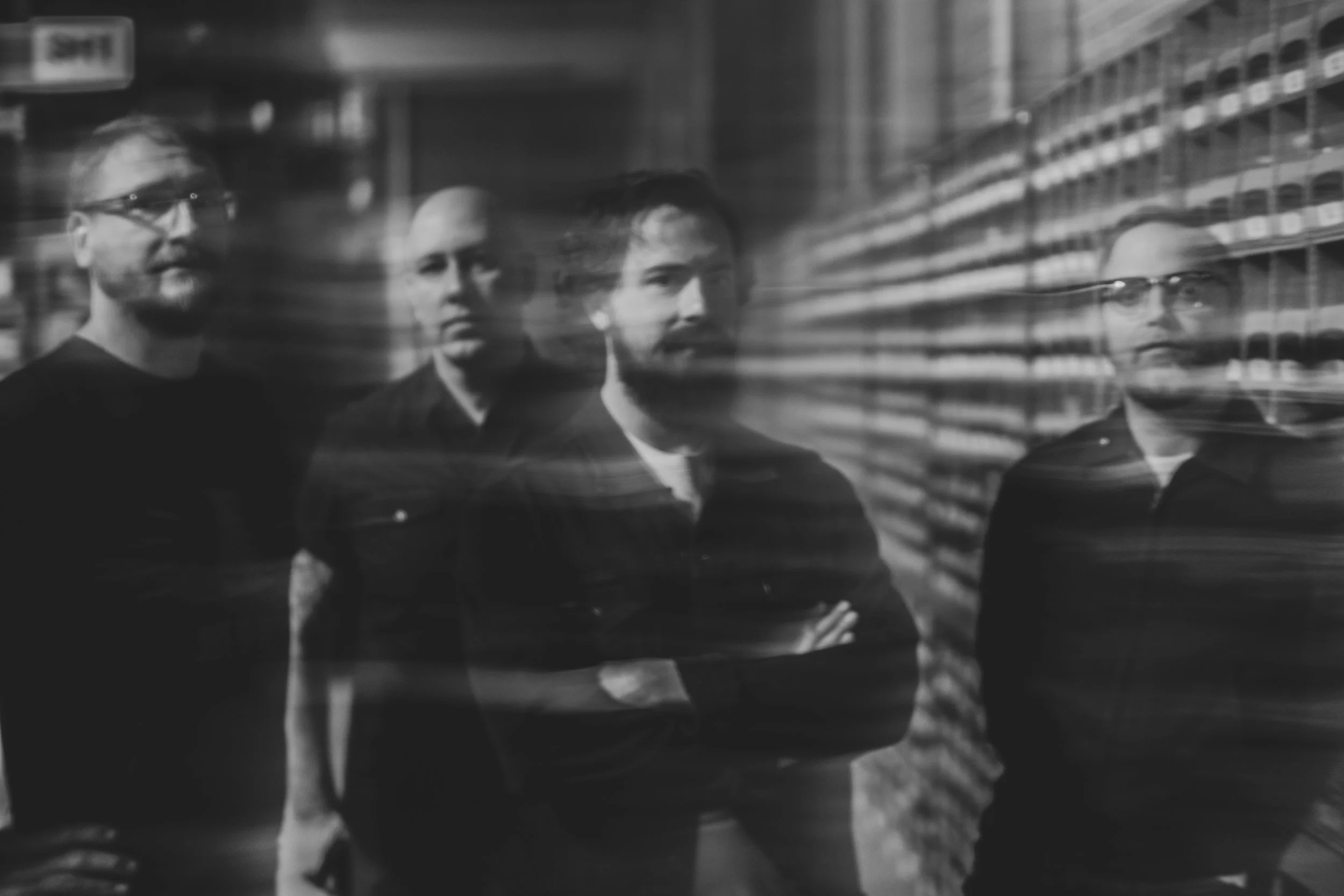
Photo courtesy of Kent Corley
Hailing from the North Carolina Triangle, Wailin Storms has created explosive Southern Gothic rock since the mid-2010s. Like an undying flame, their fifth and latest record, The Arsonist, is brutal and relentless with its haunting sonics and evocative lyricism. Just days after wrapping up a headlining tour, frontman Justin Storms talked to Luna Harper about the recording process and inspirations for the album.
Luna Harper: You just got off a tour. Were you headlining, or did you open for someone else? Can you tell me more about it?
Justin Storms: Yeah, it was mostly us headlining, with the exception of having friends play at local shows. We did our usual horseshoe [air draws a horseshoe shape], I'd like to say, from the Southwest up into the Midwest, and then back down the East Coast. We do that, typically, when we release a record, and we have another tour coming up in November that should take us to Texas and back. So that's kind of in the works right now. But yeah, it was definitely our headlining “The Arsonist” tour to promote our record.
We hit some new spots. Knoxville—we had played before, but only once before, and that was really interesting to play the Pilot Light, which is a pretty well-known venue—along with Brooklyn and New Hope [Pennsylvania]. John and Peter’s was an interesting venue that had been a staple of [New Hope] for a long time. Gosh, George Thorogood played there back in the day, the Murder Junkies are playing there soon, Eyehategod played there recently as well, so a hodgepodge of different bands have played there, and [John and Peter’s] continues to be a good little venue there.
What can fans expect from the live experience with Wailin Storms?
Typically, we have this lighting dynamic, and that's an interesting feature to our live shows. Our bassist [Steve Stanczyk] is really good at programming the lights to mesh with our songs and the crescendos of songs. We also incorporate fog, so we try to create an interesting, almost cinematic quality that pairs with the music and our live shows. Our live shows tend to be pretty full of peaks and valleys, and there's really high highs and really interesting melancholic dips to give the audience member a little bit of a—I wouldn't say palate cleanser, but I know my ears get fatigued when I'm at a really heavy show that doesn't have any respite in their set, so we try to incorporate some of those to give people a little bit of a break.
The Arsonist does a similar thing with giving listeners some respite. A lot of the songs are kickass bluesy rock, but you do have tracks like “The Wind” and “You Never Answered” trail off into some acoustics. What was it like balancing those softer sounds on this record?
I guess we didn't know how that would really translate until we got to Matt Talbott's studio, Earth Analog, and really started to see what we could do in the [recording] space. For instance, he had a classical guitar there, and so we're like, “The end of ‘You Never Answered’ could probably use an acoustic guitar.’ Here's a classical guitar, so that adds a particular style and feel to it that really adds to that song's outro. And then he happened to have a piano there, so we were like, “What if we started off the last song, ‘It’s All Dark Now Where Your Eyes Used to Be,’ with a piano, or incorporate a piano into that somehow.” So we were able to really experiment before we started to record some of the songs.
And just think critically about, “Oh, here's a neat little spice we can add to the dish,” the musical dish—not to use a bad analogy. But yeah, it was really nice to get into the studio and feel like we have these other elements we can utilize in the studio. And it sounded really interesting to incorporate those. It sounds like a more classic [makes air quotes] record in that sense, but for us, it allowed us to be more experimental than we have in the past.
Is the opportunity to experiment something y’all have been able to do previously, or was this playfulness new with The Arsonist?
I think we felt way more creative and felt like we allowed enough time for the play to happen in the studio on this record, whereas sometimes the budget was thinner in the past, and we had just enough time to get through songs and not really think about those extra playful—I don't want to say filigree, but extra touches to certain songs and think about production. Even though that did exist here and there, I felt like that was something that happened post-recording, like with the mixing process. In this case, we felt like, “Okay, we're recording in analog. We should document how we'd like for it to sound, and think about how we should start and stop songs, or maybe elements that we can incorporate in certain parts. Here's an organ, for instance, that we could easily incorporate into ‘Heart of Mine’ that just made it feel like… the theme song for ‘Twin Peaks,’ or just gives it an extra zhuzh.”
In the past maybe these instruments did exist in these spaces, but we were very much like, “Here's the music. Maybe if we have time, we'll mess with some things,” but it never quite got there. So, yeah, that was unique about this particular recording and how we recorded it, and the collaborative aspect… [like] incorporating a new guitarist into this record. I felt like that lended [sic] itself to the playful aspect of this recording in the studio session.
In the press release for The Arsonist, you also mentioned that you included stripped-back, raw instrumentals that hark back to your earlier work. In this era of AI slop and palatable music made for the masses, what inspired you to revisit your earlier sound to combat those trends?
It just felt like a natural digression, or progression—like to revert, but also to rebel against the modern trends of overproduced and AI-generated music. But instinctively, growing up in punk music and recording myself with 4 tracks, we made an intentional decision to record with Matt, who only records with analog tape—real, real tape. When we got there, we're like, “Oh, wow, there's no computers to be seen.” This is physical analog tape. He's punching in and out of edits and stuff like that. So really, we have to be really careful about [getting] it to a place where we want it to be and just live with the flaws. You don't really notice it. I notice the flaws, but it doesn't bother me.
It feels good to be able to be like, “Alright, we didn't clean this up so much that it sounds perfect.” It has that human element that I miss about my favorite records. And I do hear that more and more. I feel like people are gravitating towards that human element in music-making [and] art-making. But then there's the flip side of that, obviously, with AI and stuff. So that felt like a really intentional decision, though, of ours: choosing that engineer, how we recorded, how the recording is made. All these things just felt like what needed to happen and how the music needed to be documented. And it worked out.
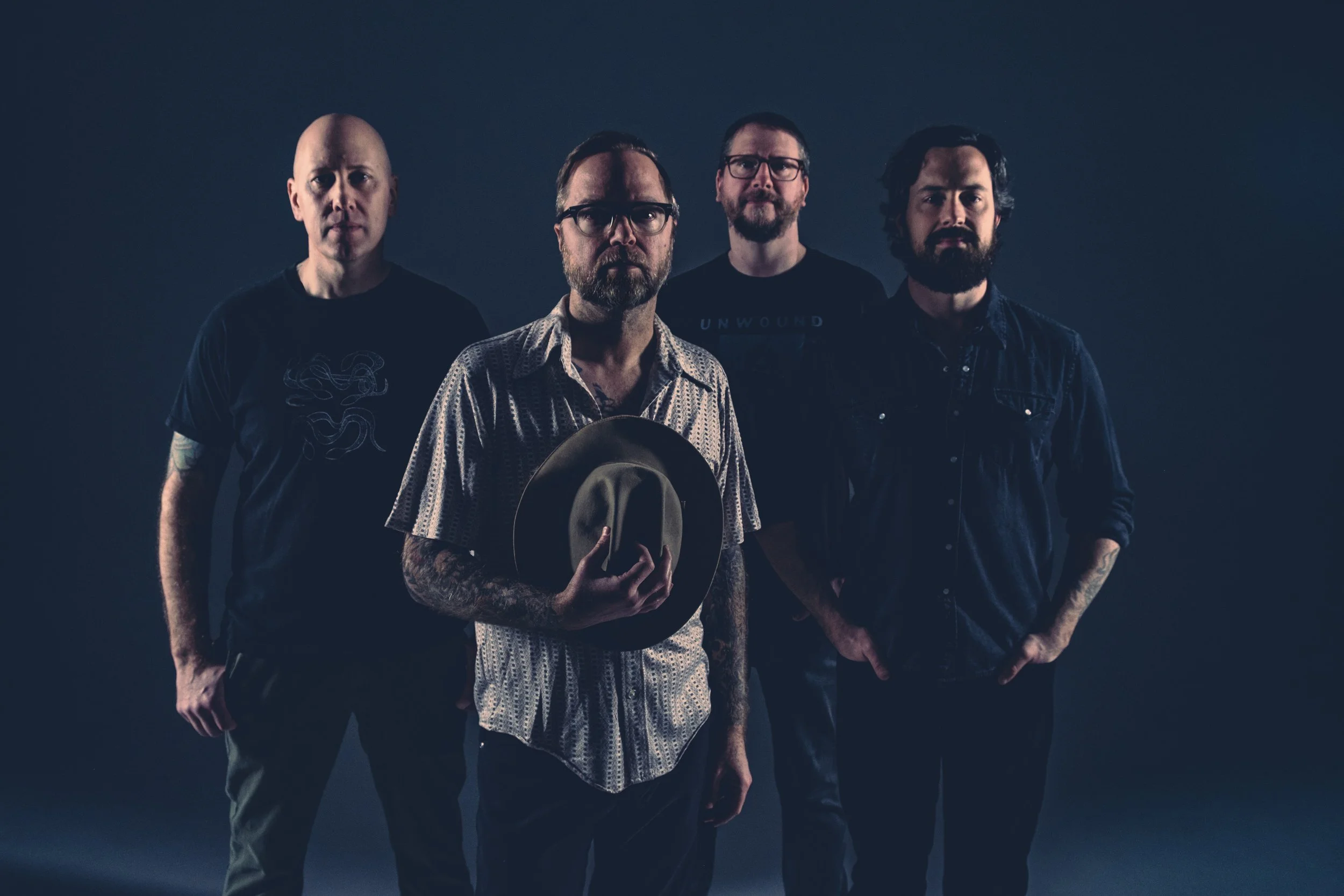
Photo courtesy of Kent Corley
You mentioned you grew up in the punk scene, but you were also the child of Baptists. Was rock music ever a part of your childhood? What were some of your earliest influences?
That’s a good question. I grew up in the church. My dad's a Southern Baptist minister. My mom's a church pianist. They met in this tiny little church in North Texas in a small town called Graham. Buffalo Lake was the name of the church. She is a church pianist/organist. My dad was a preacher at the time, and they met. I feel like Southern Baptist or Baptist hymns have always been in my life. But then early on, my uncle gave me a Black Sabbath tape, a Jimi Hendrix tape, and—it seemed like something else, but those are the two that really stuck out to me. Black Sabbath’s Paranoid. Jimi Hendrix’s Are You Experienced, I believe, or maybe his greatest hits. I can’t remember the tape, but it was influential. After that, my older brother gave me a bunch of mixtapes that included punk bands like Blitz on it, GBH, all sorts of stuff. I could geek out about the mixtapes that I received when I was a kid.
Piano was always in our house, and people are playing piano and singing…I just gravitated towards that and making art early on. I think around 15 was when I started my first punk band with some friends of mine. And then we started playing shows. So long story short, gospel music is in there, even though I felt like the black sheep of the church and definitely was a punk and rebellious from early on—which all preacher's kids are, I guess. Or that's the stereotype anyways.
Luckily my dad was progressive and my mom was progressive. We were raised conservatively, but not politically conservatively, so that was nice, being in South Texas. Parts of Texas are very conservative, but luckily South Texas at the time wasn't; it might be now. There's a thriving punk scene there where all-age shows would happen. I mean, when I was like 16, I saw Youth Brigade with Voodoo Glow Skulls, and all my friends’ punk bands were playing. It's pretty great to grow up in a town where there was a decent music scene.
Moving forward a bit, you moved to North Carolina a little over a decade ago now. How has that influenced your evolution as an artist, and have you still kept to your Texas roots?
Yeah, Texas is definitely such an influential part of my life, being fourth-generation Texan with families that raise cattle. My great-grandfather was actually gored to death by a bull. There's just a bunch of weird mythology and history with my family and Texas in general that I try to touch upon in music, whether that be “La Llorona,” in “Down in South Texas,” or stories about my family that are pretty personal, but I try to write about in a cryptic way to where maybe people in my family would know what I'm talking about, but the general public—they seem to relate to it. I definitely write pretty regional Texas folklore-ish stuff.
But “Carolina Moon” is referencing specific places in North Carolina, so I try to incorporate where I live now into my music and it's unavoidable. Nature influences me, love, my partnerships here, friends here. The environment here [in North Carolina] definitely influences our records at the moment.
The Arsonist is relentless and nightmarish in the best way possible, and its lyrics are very surreal. What are some of your lyrical inspirations, and are dreams or anything else detached from real life involved in your process?
I definitely gravitate towards surrealist filmmakers and surrealist painters, or magic surrealism, or symbolic painters, symbolic filmmakers, and writers, for that matter. David Lynch would be a big one. Most of his films. His newest films aren’t my favorite, but I love Mulholland Drive, I love Twin Peaks, I love Wild at Heart. I would be lying if I didn't say that those films influenced this body of work, especially Wild at Heart and Twin Peaks directly. Especially René Magritte, too, like his night series—I believe it’s what they call those, but there's a painting or two that I directly ripped off. “[Gaspard] the Nightwalker” is the title of it, where there's a house burning in a field, a raven in the foreground, moon above the house, and it’s in a desolate field. Those elements: art, cinema, music—those are really important aspects. And lyrically, as much as I'd like to think there's this really heavy darkness to the songs, there's also satire and playing with the idea of death and love. There's some humor in there, but it does seem melancholic and dark, mostly.
I love all these name drops. You also painted the cover art for The Arsonist. Do you find a lot of inspiration from non-musical media? Does your practice as a visual artist translate into your work as a musician?
Absolutely. I grew up painting [and] drawing. [I] went to school for art, traveled, lived in Europe because of artist residencies. [I] take photos, still use manual cameras and medium-format cameras, film, photography. I don’t produce my photos in the darkroom anymore, but I still am very much into tactile art forms and painting when I can, trying to sketch when I can. All of it definitely informs each other. It's all intertwined. My partner [Cambria Storms], for instance, she's an experimental performance artist. She's really inspirational. There's a DIY house where we recorded our video for [title track] “The Arsonist” here called The Cathedral that a lot of our friends perform at. There's a nice little artists scene here or collective. We don't call ourselves Dada, or surrealist, or The Black Mountain College or anything, but there's a lot of close-knit art-making happening here, and it's all pretty influential. Definitely seeps into my work. Can't avoid it. Yeah, for sure.
All these influences feel like worldbuilding for The Arsonist. Are there any media, whether it be books, films, or art, you’d recommend fans to check out to immerse themselves in this world?
For sure, that’s a good one. Definitely Cormac McCarthy. Gosh, there's so many good books by [him]: All the Pretty Horses, Child of God. The Road’s a little bit too post-apocalyptic, but it's worth reading. Anything by Cormac McCarthy, I'd recommend to get an idea of what's influenced us. Definitely early David Lynch films: “Eraserhead,” even [his] short films are great. Obviously Twin Peaks, “Blue Velvet,” and “Wild at Heart.” Magritte, definitely. I'd recommend Leonora Carrington, a magic surrealist painter. [She was] partners with Max Ernst for a long time. They're part of that surrealist scene, but then they separated, and she went off to Mexico and got influenced by the Mexican surrealists. Really interesting work, very mystical and magical. I would say that's a pretty influential person. But film-wise, there's tons of directors and filmmakers tying realism. Russian filmmakers—I think I saw “Stalker” [in the theater] before I wrote this record; that was really influential.
Luckily, we have a really good film program here that's related to Duke [University]. That's where they showed that, and I was pretty blown away. And it turns out everybody died of lung cancer from that, or some kind of cancer, because the water and the settings were so polluted, which is just wild to me. But you don't know until it's too late, right? You're making art in a space that's toxic. I’ve definitely let toxic metal absorb into my skin from making paintings and stuff like that, and I'm sure that'll come back to haunt me eventually, but we'll see. Hopefully not, hopefully not.
Fingers crossed! But these are great recommendations. I also love “Stalker,” and it’s one of my all-time favorites. It’s great to hear it translated into some of your work as well.
Absolutely. Oh, that's such a great movie. Yeah, all [of Tarkovsky’s] films are great, but that's definitely one of the top. It's a heavy one, but if people are patient, I recommend it.
Anything you’d like to plug?
All the usual stuff. The new record’s out now on [independent record label] Seasons of the Mist. We're looking to tour more in November and hopefully get over to Europe next year to do some touring and festivals and stuff. I can't really be specific about any plans until those get confirmed, but there are some things in the works that are happening next year, but yeah.
This interview has been minimally edited for clarity.
You can find Wailin Storms on streaming platforms such as Spotify and Bandcamp, and on social media such as Instagram and Bluesky.