Review: ‘Barrio Triste’ Meanders Through a Promising Premise
Colombian-American director Stillz reimagines Colombia’s city of eternal spring as a site of endless juvenile violence—but underdelivers on plot.
Written by Luna Harper
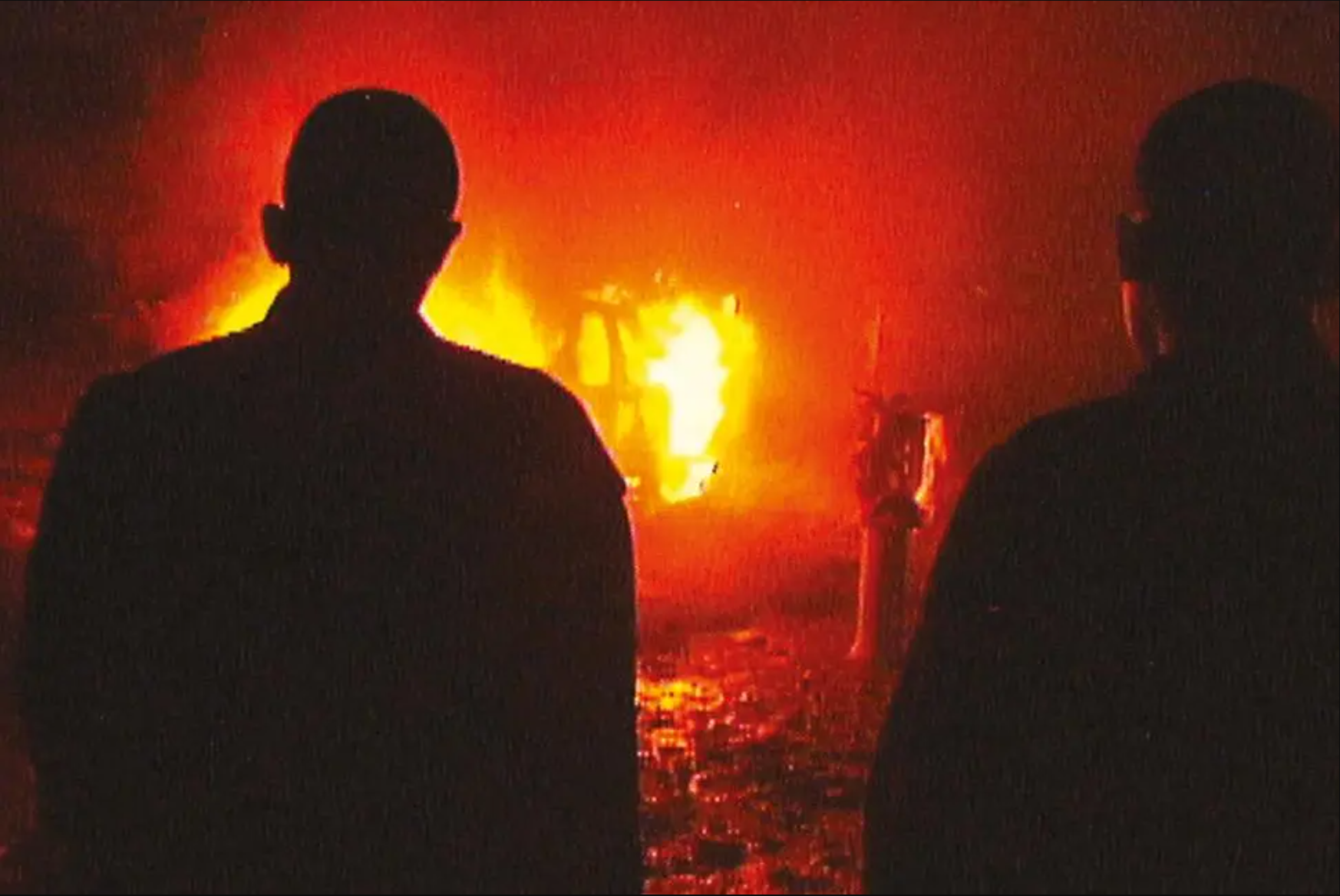
Image courtesy of EDGLRD
Please note: This review contains spoilers.
In the late 20th century, Colombia was still nursing wounds from La Violencia, a decade-long civil conflict that took 200,000 lives. As a new form of violence—narcoterrorism—took over in the late 70s and 80s with Pablo Escobar’s reign of terror, so too came a new wave of Colombian cinema: pornomiseria, or misery porn. In a blog post where they coined the term, filmmakers Luis Ospina and Carlos Mayolo share that “at the beginning of the seventies, a certain kind of documentary film appeared [where]… misery and poverty became a striking theme.” Ospina and Mayolo argue that such documentaries exploited their subjects by commodifying their adversity, “presented as one more spectacle for audiences to cleanse their dirty consciences.” In doing so, Colombian documentarians created narratives for the wealthy European gaze, far removed from the people they depict.
Barrio Triste (Sad Neighborhood) attempts to rectify this history by placing the camera directly in its subjects’ hands. The found-footage drama, which is music video director Stillz’s first narrative feature, follows a group of teens in 1987 Medellín, Colombia. It begins with a shaky shot of a news correspondent who reports on supernatural sightings around the city before a gang of boys take on the cameraman. They seize the camera in fits of laughter and run off into an alleyway, where they loiter and smoke while debating whether to pawn off their new toy. Ultimately, they choose to keep the camera, which an unnamed teen uses to capture his comrades’ descent into nihilism.
The scene cuts to a frantic sequence in which the boys drive in a cramped vehicle while wearing wooden devil masks. A radio show drones on the car’s speakers as a man confesses to murdering sex workers. “Jesús, hermano, usted es un asesino serial!” (“Jesús, brother, you are a serial killer!”), a stunned radio host exclaims in a rare moment of humor. The teens clamber out of the car with guns in tow and storm into a jewelry store. The robbery feels disorderly and juvenile, as the boys needlessly point guns at patrons and even shoot an older man.
Despite the gravity of the young men’s misdeeds, everything feels inconsequential. Aside from a scene where the teens argue and blame Calambre (played by Tomas Tinoco Higuita) for killing the man, the robbery is never mentioned again. Instead, the film discards its promise of a misfit crime drama, meandering through the rest of its runtime with vignettes that are more aesthetic than plot. In a dreamlike sequence, the camera pans across a room to reveal a group of children with buzzcuts watching TV static as an older boy lies on a bed while petting a rabbit. There’s probably a message there about the fragility of boyhood, but without score composer Arca’s tender song “Piel” to drive the scene, the shot feels ultimately empty.
Image courtesy of EDGLRD
In this sense, the Venezuelan producer’s score does a lot of worldbuilding for the film. Each track creates a sinister ambiance that feels undeserved, as many scenes simply show the boys wandering and people-watching. With little plot or dialogue to work with, most scenes feel like loosely connected music videos for Arca to showcase her undeniable musical prowess. The somber electronics follow the boys everywhere they go: while roughhousing by a burning car, swimming at night, and even while aimlessly walking down the street. Quiet and soothing at times and visceral and chaotic in others, the ever-present score packs more of an emotional punch than any of the characters.
While the actors do breathe some life into their roles with their naturalistic performances, they have minimal dialogue to work with. With shaven heads and street names like Calambre (meaning cramp) and Cuchilla (meaning blade), the boys have little in the way of discernible identities. The exception is Piojo (played by Juan Pablo Baena), who appears in closeups that are interspersed throughout Barrio Triste. In these scenes, Piojo sits in an interrogation room while musing about the meaning of dreams and memories. “No estaremos en dos o tres años, pero de pronto nuestras memorias sobrevivan. Eso es todo lo que queremos” (“We won’t be here in two or three years, but perhaps our memories will survive. That is all we want”). This moment of self-reflection feels more like Stillz trying to force a message onto the film rather than allowing the themes to emerge organically.
Another element that feels detached from Barrio Triste is the supernatural subplot. Everywhere the teens wander, there are missing person posters accompanied with a sense of impending danger (courtesy of Arca’s score, of course). The boys seem unfazed by these disappearances, and even welcome the extraterrestrial presence that is loosely connected to them. They stumble on an abandoned building with obscene graffiti and the spray-painted words Somos hijos de luz. Nacimos sin familia, sin amor (We are children of light. We were born without family, without love). At the rooftop, the young men approach an alien-like being that emanates light, disappearing into nothing as they touch it. Later, the boy with the camera returns to find a larger, xenomorph-like creature looming over the body of a disemboweled young man. The teen, seemingly unbothered by the bizarre scene, stops to have a cigarette before abandoning the camera for good.
And that’s where Barrio Triste ends. The film leaves viewers with more questions than answers. Was the dead body a sacrifice the boys made for the aliens? Why don’t the teens have any semblance of school or family? What was the point of anything at all? With its minimal dialogue and score-driven scenes, Stillz’s debut feature feels like a self-indulgent, extended music video. Fitting, given his previous work with the likes of Bad Bunny and Rosalía, but it leaves much to be desired in terms of plot. Ultimately, “Barrio Triste” feels as empty and nihilistic as the characters it portrays.