Interview: Glenn Yeffeth
Arundhati Ghosh sat down with Glenn Yeffeth of Benbella Books—a Dallas-based publishing house known for their niche nonfiction bestsellers and their open emphasis on marketing—to talk about the future of publishing.
This interview was originally done in April 2025 and is not being published with intentions beyond showcasing the writer’s work. The author of this piece, and Barricade Magazine at large, are wholly against generative AI and always have been.
Written by Arundhati Ghosh
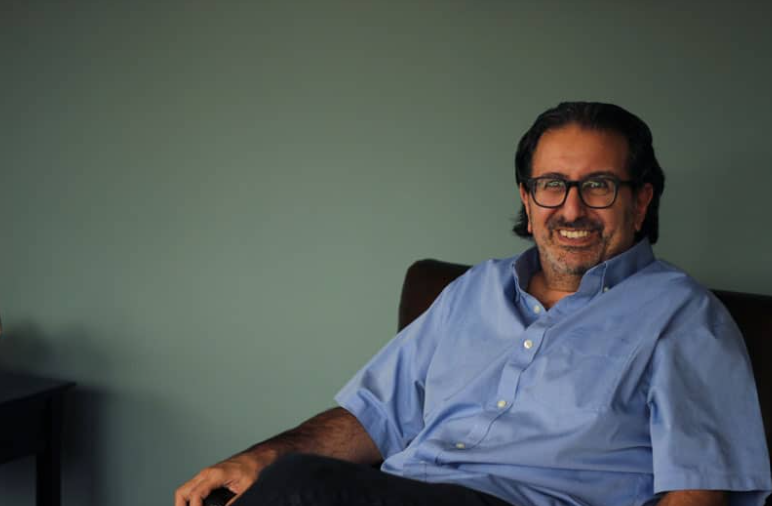
Photo courtesy of Benbella Books
Arundhati Ghosh sat down (in a metaphorical sense, as this was a phone interview) with Glenn Yeffeth to talk about the future of publishing. Since 2001, he has been the CEO of Benbella Books, a Dallas-based publishing house known for their niche nonfiction bestsellers and their open emphasis on marketing. Over the past two decades and some change, he has seen innovation in books reach unprecedented heights and meet new challenges, from the introduction of the Kindle in 2007 and Amazon’s acquisition of Audible in 2008 to the recent boom in self-published material. It is inevitable, of course, that I had some questions for the industry veteran about the uptick in the usage of AI in other fields, and how that might look for publishing in the coming years.
Arundhati Ghosh: Benbella is unique because of the outward emphasis y’all place on marketing. I know that there’s no constant secret or plan that always works, but your website does state that y’all “welcome authors who want to aggressively market their books” and that you “supply tools and training to make them more effective” for them. Would you say that your authors are more involved in the marketing process than they typically would be?
Glenn Yeffeth: You know, I’d have to compare with how it might be in other firms where I’m not, so I’m sort of guessing. Just to go back a little bit, if you look 10, 15 years ago, it was much more around traditional publicity, getting on television, that sort of thing. It wasn’t about social media. There was more of an expectation that the publisher would help them get on TV and that sort of thing. Now, you’ve got authors with huge online platforms and they can drive a lot of marketing on their own, no matter who their publisher is.
I think every publisher does look for that and does expect the authors to do that. I think where we’re a little different is around the authors who maybe have a smaller social media platform. They’re experts, but they don’t necessarily have that sort of reach, and [we work on] helping them find the niche audience for their book if the book’s a little niche-y and doing more things that require a little more legwork and analysis of what we can find. Let’s say people who have AFib, or, you know, we just did a book for African Americans on finance… it’s about how you find those people, about reaching that group. We work very hard at that niche marketing.
Big picture I’d say, there’s only so much marketing energy that a publisher has, and for the big publishers, it’s focused on the big books. The level of book that would be a big book for us or even a medium book for us, where we’d put a lot of energy behind it, would be a small book for a big house and would get very little marketing attention. I’m told over and over again by our authors that their publisher didn’t have much time for them. I’m sure that’s not true for all [big publishing house’s] authors, but it’s just a matter of what level you are compared to the firm, if that makes sense.
That makes total sense! I think this does lead into my next question, which is in alignment with how niche some of your work is and how specialized some of the topics are, as well as how diverse the audiences y’all reach are. I know you guys are trying to re-introduce some fiction into your lineup. With the personalized aspect of being a smaller firm as well, do marketing and media plans for fiction releases differ from non-fiction releases? How do y’all plan to work with those different genres and avenues?
For the most part, fiction is very different than [sic] non-fiction. It’s much more review-driven, much more tour-driven for a big author. It’s much less around the concept of content-driven marketing around the topic of the non-fiction work. I think fiction is harder to market than non-fiction just because there’s fewer creative things you can do, really. But when we say we’re going to try some fiction, we’re talking about people with very big platforms and big media access, so it’s almost more like a non-fiction book.
To give you one example, we’re doing a, sort of, hockey romance, but maybe more literary than that. A hockey romance is big, but it’s a little more sophisticated than that, so it’s a little more upscale than a typical hockey romance. It’s basically in that genre. It’s co-written by an established fiction author and a well-known hockey player who’s got a very big platform. Like he’s in [Nolan’s Oppenheimer].
Oh, wow.
So he’s got a big platform, she’s a legit fiction author, so we’re combining those two. We can market it using a lot of the same things we might do for a non-fiction book.
I can see that being huge, especially with hockey having such a market right now!
I hope you’re right!
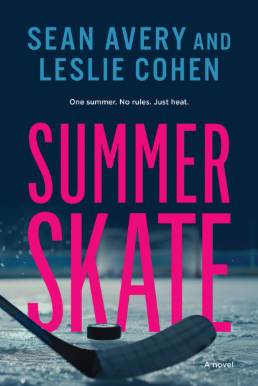
Image courtesy of Benbella Books
In line with marketing but on a bit of a more personal note for you… What marketing skills did you bring in from your previous jobs, and what were the greatest adjustments you had to make when you were getting Benbella off the ground?
That is a good question. I really came out of the consulting strategy world and marketing was part of it, but it was marketing in a more intellectual, abstract way. Thinking about your target market, thinking about your competition, thinking about coming up with strategies to find your niche audience. But, I wasn’t a hands-on guy, I was a consultant.
Now at Benbella, it’s very different. Those basic ideas still come into play, but 99% of it is tactical. It’s thinking about, “How do I get on these podcasts?” “How do I get on Medium mentions?” “How do I best help our authors use their social media to sell books?” So, 99% of that we learned on the job, talking with experts and consulting and trying things. Only 1% of that was stuff that I knew when I came in.
You’ve seen some huge things, like the Kindle’s introduction and audiobooks becoming more popular. I know this is a very vague question, but do you have any predictions for what is next? Is it AI?
Well… you know it’s… who is it that said it’s hard to predict, especially the future? You know, I’ve been wrong so many times, but I mean it’s hard to imagine [AI] not being an important part of the process of doing publishing in a few years. In fact, even now, we’ve started to integrate AI into some of the things that we do. It’s not ready for primetime in terms of replacing anybody or anything like that, but it definitely can speed you up and make you more productive.
I’ve been using it for a year plus now, and I can say that what ChatGPT can do right now is way more impressive than what it could do six months ago. It’s really moving fast, it’s almost scary that it might replace publishers themselves rather than some function in publishing. You know, right now you can go into ChatGPT and upload an entire manuscript and ask it for an editorial letter. Would you send that to an author? No. But six months ago, you couldn’t even upload that data to ChatGPT, so it really has evolved very fast.
Audio continues to be really important. You know, it’s funny because when I started this, every year there are people predicting that books are dying and books are over, and you kind of worry about it a little bit every year. After 25 years, you stop worrying that this is the year nobody’s going to buy books anymore. But, I do think it’s a real thing, and it is harder to focus on books. I feel it myself. People that I respect, like intellectuals who are book people, will say it’s harder to read books than it was, just because there are so many diversions, so many attention span destroying things. That’s real.
Nevertheless, if you look at book sales, they have been basically flat or slightly growing the whole time I’ve been doing this. For 25 years, it really hasn’t shrunk. It’s hard to really count, because there’s been such a huge growth in Kindle books that are self-published and those don’t really make the normal metrics, so you can’t always tell. If you included those, there’s probably been more growth than we credit it for. I do think, you know, one thing we’ve seen in my era is the huge growth in podcasts.
People are willing to listen to a four-hour podcast, and that’s, you know, half an audiobook. So, audio is a medium that is growing. We’re training people to be comfortable with long audio. I do think that will continue to grow, and audio’s a very important part of publishing now. It’s not as lucrative as publishing books, just because it’s so dominated by one vendor and they can squeeze a lot of margin out of it. That is, obviously, Audible.
Right.
Something about a book is kind of a perfect medium. It is hard to improve. We went through a few waves, in my day, of enhanced books and interactive books and all those things that were going to revolutionize books. I was always skeptical about them and it turns out that [I] was right. Those are kind of like… an app is an app and a book is a book and they’re different things. Trying to make a book have an app doesn’t really improve it. It just is a crappy app.
We’ve had books for a long time, and the book itself, unless we come up with something to directly integrate it into the brain, or maybe your generation doesn’t want to read anymore—there’s a lot of anecdotal evidence of that, it’s not clear if it’s true, we’ll see over time—I think books might slowly shrink, but I don’t know if the technology of the book is going to change that much. I don’t see anything on the horizon.
I do think a lot of what we’re doing is symbol manipulation and that is what these large language models are designed to do. There’s a lot of overlap between what publishing does and what AI does, so I gotta think that’s going to be a bigger factor. There’s so much money and energy and possible upside that comes with a book that you really do want to put effort in. Producing 10% worse books for 20% cheaper isn’t going to be a recipe for success. Making the books strong is critical, and it’s going to be a while before you don’t need a lot of people for that.
I hope the anecdotes [about my generation] are wrong and people my age continue to read so that I don’t end up out of a job any time soon! I have one more AI question: Do you see a difference in how certain jobs in publishing react to AI? Would, for example, production be more open to it than people in editorial? Is that a divisive thing in the industry right now?
I think there’s a general sentiment among a lot of people, especially younger people and especially people in the arts—if you consider publishing to be in the arts—that there’s something bad about AI. There’s some legitimate basis for that. One, it hasn’t been particularly respectful of authors’ rights in terms of how it’s been developed, and two, ecologically, it uses up so much energy. There’s things about it that make people feel like it’s a moral gray area. I think in publishing, that sentiment is out there across departments.
Right now, it’s fine to hold those sentiments. I think, in the next three years, it’s going to be very hard to work in publishing and decide that you don’t want to be a part of [using] AI. It’ll be like deciding you want to be in publishing but you don’t want to cut down any trees. You may not be for cutting down trees, but if you want books, you have to cut down trees!
I don’t know if it’ll matter what department you’re in. I can tell you right now, for marketing, one of the things we try to do, if we pitch a big podcast, we want to explain to the podcast that this is the perfect book for them with specific examples from other podcast episodes they’ve done. AI can make that so much easier. Think about how much work you have to do in researching each podcast to figure out what are some similar things they’ve done in the past. AI could just come up with a whole bunch of instant suggestions for that. Now, they may not all be right. You still have to check them. But, it saves a lot of time and allows you to do more with the same amount of time.
In production, there’s a lot of proofing. I did a little test where I went in and made three very subtle errors to an essay we published. We put it through the AI and it found them instantly along with some other errors we hadn’t noticed! Again, I wouldn’t just send it to the printer, but boy, it’s a great headstart. Same thing with editing. Same thing with coming up with ideas. If you upload a proposal that an author sends you and say, “come up with five different title ideas,” “come up with great back cover copy,” it’ll do it. None of it’s ready for primetime—although sometimes it’s kind of close—but it’s a great start.
The hardest thing is often starting with a blank sheet of paper and figuring out how to start. It’s wonderful to get something to kick you off.
I can see how it may seem like an unavoidable thing. My final question is, of course, what’s next? How do y’all aim to expand Benbella’s reach and find new readers?
Mostly, it’s up to our authors. For us, it’s about continuing to build our ability to compete successfully for good projects. I mean, if you’ve got good projects from good authors with good platforms, you’re gonna sell books. It’s all about winning those projects at the right price. There’s no perfect book, just like there’s no perfect stock. It’s what the price of the stock is at. So if we buy the book at the right price, then it’s a great book.
We’re always trying to come up with ways to compete better against the big houses. They’re no dummies and they have a lot of money, so it’s always challenging, but we can continue to do it because, you know, part of it is just that we’re starting from such a good place with a good reputation. Now, it’s about getting more creative and continually thinking of new things. I think our future is becoming better competitors. We don’t have to, but our plan is to keep growing in terms of the number of titles we have. I also want to make sure that we are getting more productive and continuing to use new tools, like with AI.
We are going into a very difficult time period. No one knows exactly what that’s gonna look like, but there’s a very good chance that printing is going to be more expensive. There’s a decent chance we’re going to be in a recession within the next six months. All that comes with some challenges that we have to be ready for.
There’s also opportunities. Sometimes, when the big publishers are hurting, we acquire our best books.
This interview has been minimally edited for clarity.
For more information about Benbella Books, you can find their website here.